

STANDARD 5.4
Interpret student data: Demonstrate the capacity to interpret student assessment data to evaluate student learning and modify teaching practice.
ARTEFACT 1:
NAPLAN AND EXAM DATA
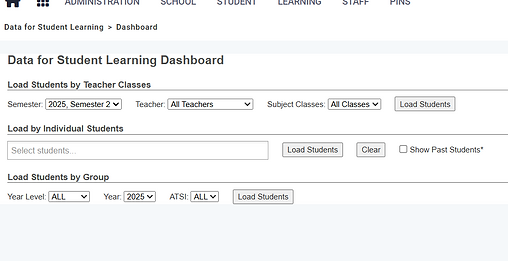


Artefact 1 shows my analysis of NAPLAN data and examination results, demonstrating proficiency in AITSL Standard 5.4, as it provides me with concrete evidence to systematically evaluate student learning outcomes and make informed modifications to my teaching practice. Through examining longitudinal NAPLAN results alongside classroom assessments, I have developed a comprehensive understanding of how data-driven decision making enhances my pedagogical effectiveness.
Black and Wiliam (2018) emphasize that effective classroom assessment requires teachers to interpret multiple forms of assessment data to inform instructional decisions, a principle I have embedded into my regular practice. When I analyze NAPLAN reading comprehension scores, for instance, I can identify specific students who may require targeted intervention strategies, while simultaneously evaluating whether my whole-class instructional approaches are meeting the diverse needs of my learners. This systematic approach to data interpretation allows me to move beyond intuitive judgments about student progress toward evidence-based modifications that directly address identified learning gaps.
Interpreting Data for Instructional Decision Making
The capacity to interpret student assessment data effectively requires a multifaceted approach that considers both individual student growth and cohort performance trends. Masters (2020) argues that learning progressions provide essential frameworks for understanding how students develop competencies over time, and I have found that mapping NAPLAN results against these progressions enables me to identify where students are positioned in their learning journey. Shepard (2019) reinforces this approach, noting that meaningful assessment interpretation involves examining patterns across various data sources rather than relying on isolated test scores. In my practice, I cross-reference NAPLAN numeracy results with classroom-based problem-solving assessments to gain deeper insights into students' mathematical reasoning capabilities, which then informs my decisions about whether to modify my teaching strategies, adjust curriculum pacing, or implement differentiated learning experiences.
Evaluating and Modifying Teaching Practice
The evaluation of student learning outcomes through NAPLAN and examination data has enabled me to engage in reflective practice that directly impacts my pedagogical approaches. Hattie and Timperley (2007) demonstrate that effective feedback loops between assessment data and teaching practice significantly enhance student achievement, a principle I have operationalized through systematic data review cycles. When NAPLAN writing results indicated that my students were underperforming in text structure and organization, I modified my writing instruction to incorporate explicit teaching of genre conventions and increased opportunities for peer feedback and revision. Timperley et al. (2007) suggest that professional learning is most effective when it is directly linked to student outcome data, and I have found that analyzing assessment results alongside curriculum standards helps me identify specific areas where my teaching practice requires refinement. However, Thompson and Harbaugh (2019) caution that teachers must maintain a balanced perspective on standardized assessment data, ensuring that NAPLAN results inform rather than dictate pedagogical decisions.