

STANDARD 4.1
Support student participation: Identify strategies to support inclusive student participation and engagement in classroom activities.
Florian’s (2014) Inclusive Pedagogical Approach in Action framework encourages us as teachers to view diversity as a natural aspect of human development rather than a problem.Hattie (2012) emphasises that student engagement is closely linked to teachers’ active learning and reflection, making critical analysis essential for both teacher development and student success. Artefacts 1 and 2 collectively demonstrate my ability to create inclusive and engaging learning environments aligned with AITSL Standard 4.1, which focuses on catering for diverse student needs.
ARTEFACT 1:
MENTOR FEEDBACK & activity samples


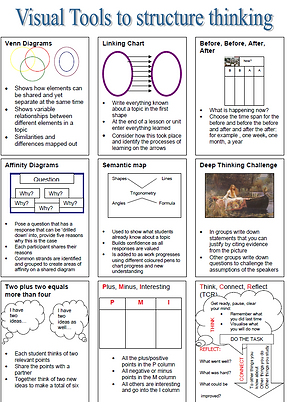
Artefact 1 consists of mentor feedback and lesson materials which illustrates some of the strategies I implemented to promote student participation.
Activities such as theoretical ‘pair and share’ exercises using Venn diagrams, and interactive games to teach new concepts, incorporated Visual Thinking Strategies (VTS). VTS supports students with diverse abilities and complements the collaborative, inquiry-based approach I aim to cultivate in the creative classroom (University College Cork, 2020). Each lesson plan included structured group dialogue, often prompted by visual media or collaborative tasks such as constructing sculptural forms. These activities foster higher-order thinking and communication skills, encourage evidence-based reasoning, and develop comfort with ambiguity, reflecting VTS principles.
Moreover, VTS enhances visual literacy and collaborative problem-solving, enabling students to engage thoughtfully and creatively with ideas and peers.Grounded in situated learning theory, these strategies recognise that knowledge is best constructed in authentic, relational contexts where students actively engage with peers and their environment (Bransford et al., 2000). Aligning with VCAA (2023) curriculum objectives, lessons emphasise teamwork and interdisciplinary collaboration, encouraging students to apply real-world problem-solving strategies. Implementing a Project-Based Learning (PBL) approach further supports collaborative practice, allowing students to collectively solve problems and engage in meaningful inquiry (Lai, 2011).
Choi (2018) highlights that students benefit from brainstorming in teams, identifying resources, and applying shared knowledge to develop innovative solutions, with the teacher acting as facilitator rather than authority figure
ARTEFACT 2:
STUDENT FEEDBACK SURVEY


Artefact 2, which comprises student feedback from surveys, complements this by demonstrating how inclusive teaching strategies can help my students feel supported and actively engaged in my classes.
I designed many of my lessons to incorporate interactive, embodied learning experiences, informed by Gardner’s Multiple Intelligences - particularly visual/spatial and bodily-kinesthetic modalities. Not only did these enhance engagement, it was a fun way to learn new content in an equitable way, regardless of students' abilities (Armstrong, 2017).
Activities such as Body-Mapping, Tape-Drawing, and group work reflect Vygotsky’s (1978) ZPD and social constructivist frameworks, emphasising scaffolding, peer collaboration, and socially mediated learning (Patoulioti & Nilholm, 2023).
Furthermore, inclusive pedagogical frameworks advocate recognising diversity as integral to learning, extending ordinary classroom practices through differentiation rather than segregation (Florian, 2014).
Active reflection on practice supports both teacher development and student success (Mockler, 2011).
